

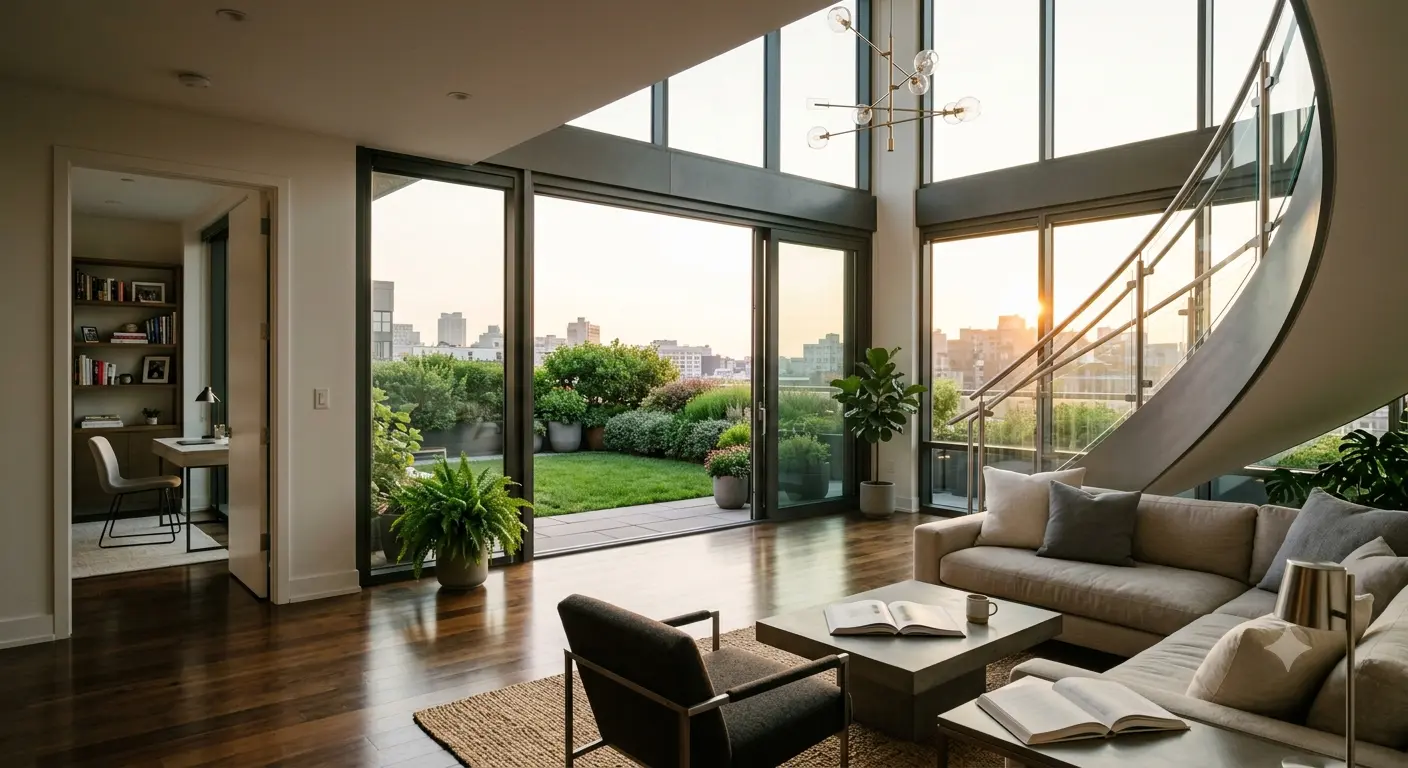
Most people mistake a lot of glass and a flat roof for architectural brilliance in modern homes, but that is just a style choice. Real brilliance is found in the invisible math of a floor plan, where the spatial flow actually reduces the friction of daily life instead of just looking good in a portfolio. If a home requires you to walk through three different rooms to get from the kitchen to the laundry, the design failed, regardless of how many floor to ceiling windows it has.
The hidden math of spatial efficiency
A common mistake in high end development is the obsession with open concept layouts. While the market loves them, a completely open floor plan often creates a nightmare for acoustics and privacy. True brilliance is not about removing walls, but about placing them where they create compression and release. You want a narrow, cozy entryway that opens into a soaring living area. This contrast makes the larger space feel bigger and the smaller space feel intentional.
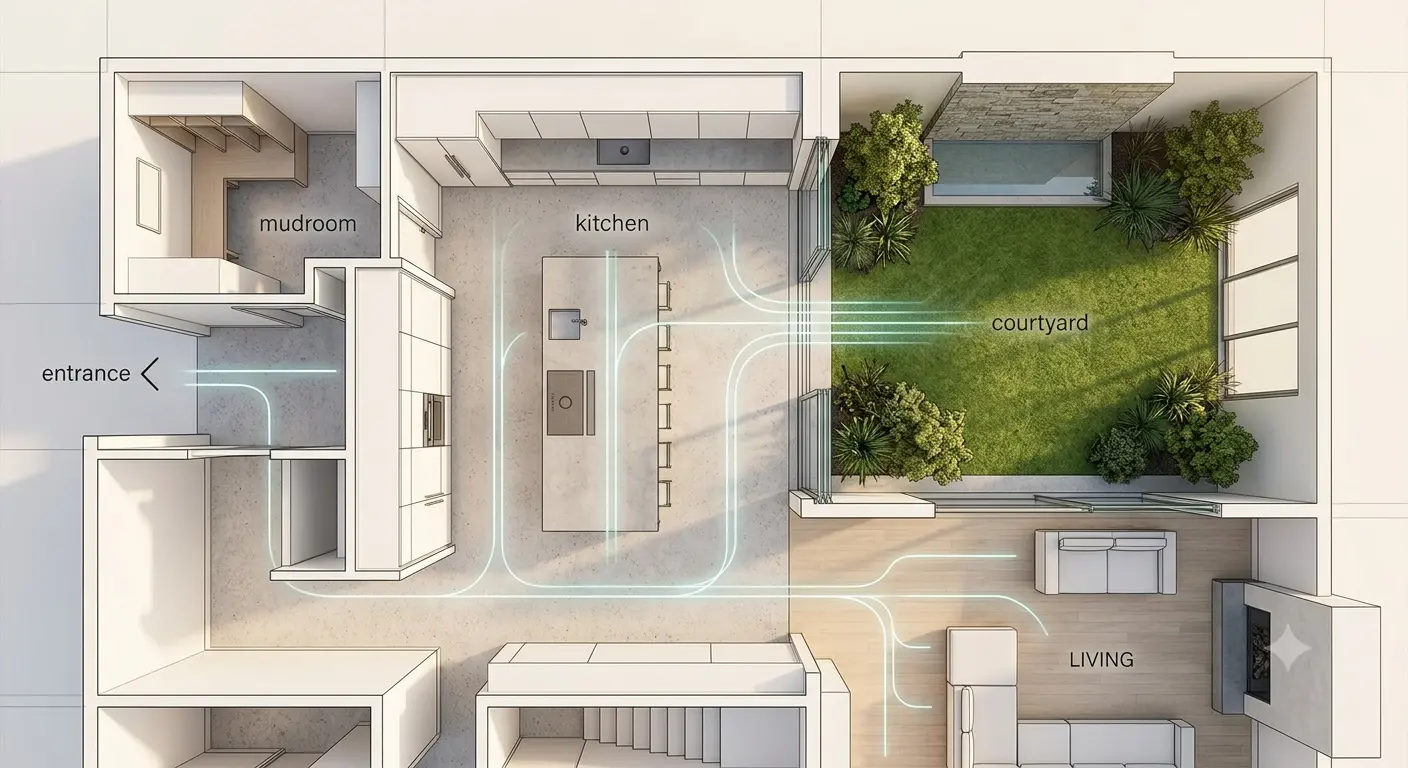
I have seen too many luxury builds where the sightlines are ignored. A well designed home ensures that when you stand in the kitchen, you can see the primary outdoor living space without seeing the clutter of a mudroom or the back of a sofa. It is about controlling the visual axis. When we evaluate residential development projects, we look for this specific intentionality. If the layout feels intuitive, it is because the architect spent more time on the circulation paths than on the facade.
Is an open floor plan actually better for living?
Not always. The “great room” trend often leads to a lack of acoustic privacy. In a truly brilliant home, you will find flex rooms or “pocket spaces” that allow a resident to be alone without being isolated. The goal is zoning. You need a clear distinction between the social zone, the private zone, and the service zone. When these overlap too much, the home feels like a gallery rather than a residence.
Can you have minimalism without it feeling cold?
Yes, but it requires a mastery of tactile materials. If everything is white drywall and polished concrete, the space feels like a clinic. Brilliance comes from layering organic textures, such as rift-sawn oak, brushed stone, or linen, against those clean lines. It is the tension between the geometric precision of the architecture and the warmth of the materials that creates a livable atmosphere.
Engineering the relationship between light and volume
Light is not just about adding windows. It is about light harvesting. Many modern homes suffer from “fishbowl syndrome,” where huge glass walls leave residents feeling exposed. The solution is strategic shading and clerestory windows, which allow light to penetrate deep into the core of the building while maintaining privacy from the street.
We also look at the volume of space. A room with a standard eight foot ceiling feels stagnant, but a vaulted ceiling with an offset pitch creates a dynamic energy. The brilliance lies in the proportionality. If the ceiling is too high without a corresponding width, the room feels like a chimney. If it is too low, it feels like a basement. The balance of verticality and horizontality is what separates a developer’s “modern” house from a piece of architecture.
True architectural brilliance is not the presence of luxury, but the absence of annoyance. It is the light switch that is exactly where your hand naturally falls and the window that frames the view without letting in the midday heat.
Where architectural brilliance in modern homes meets sustainability
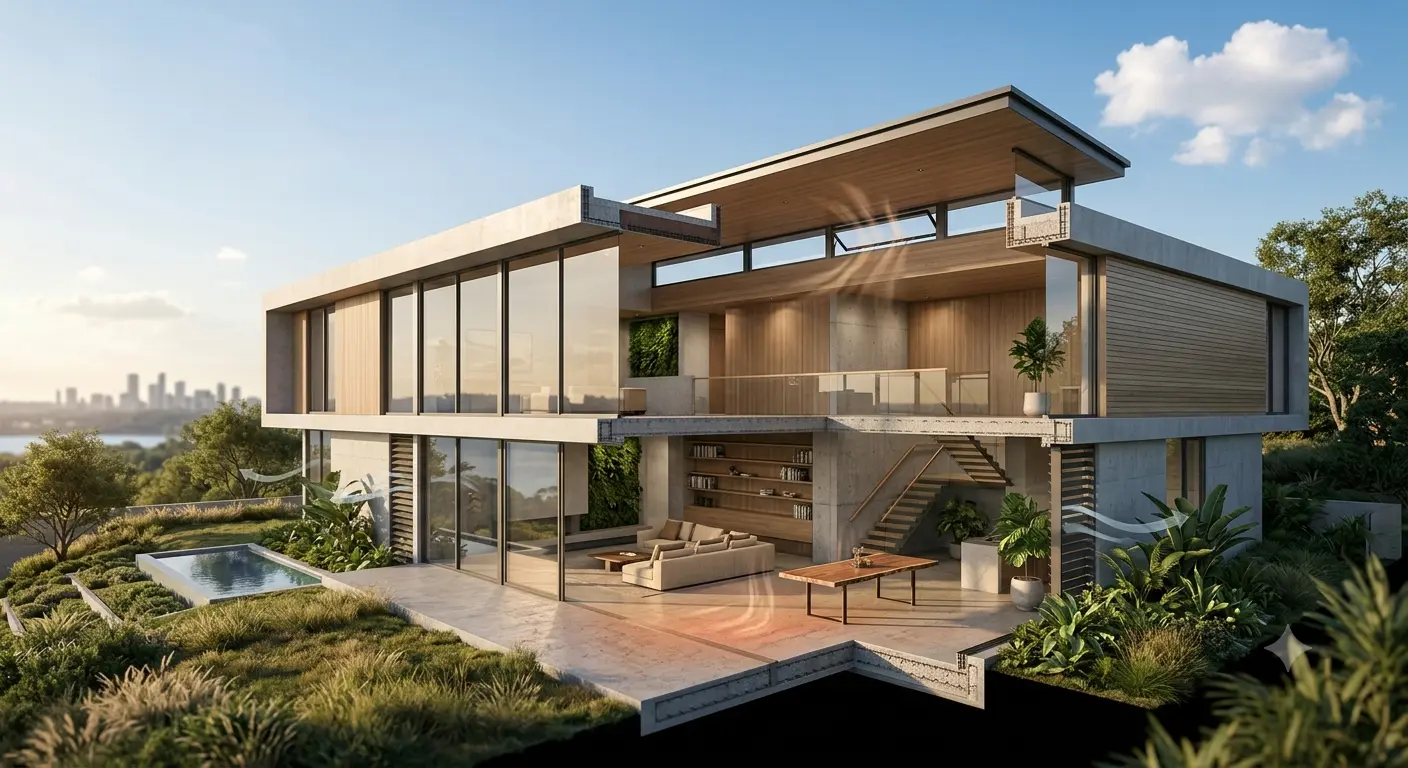
Sustainability is often treated as an add on, like adding solar panels to a poorly designed box. That is not brilliance; that is a bandage. Real innovation is passive design. This means orienting the home to take advantage of solar gain in the winter and utilizing cross ventilation to eliminate the need for air conditioning during the shoulder seasons.
I am skeptical of “smart homes” that rely entirely on gadgets. A home that needs an app to open the blinds is a failure of design. A home that uses thermal mass, such as a concrete slab that absorbs heat during the day and releases it at night, is a success. When we analyze commercial properties or luxury villas, we prioritize these passive systems because they provide a permanent increase in value and a decrease in operational friction.
Does “green” architecture compromise the aesthetic?
On the contrary, the best sustainable homes are the most beautiful because they are rooted in their environment. Using local materials, such as regional limestone or reclaimed timber, gives a home a sense of place that imported luxury materials cannot match. The aesthetic becomes a result of the environmental logic, which is the highest form of design.
Is the cost of custom architecture worth the investment?
If you are building for a short term flip, probably not. But if you are looking for long term equity, the answer is yes. A home that is architecturally sound retains its value far better than a trend based build. The difference is in the resale velocity. Buyers can sense when a home is logically laid out, and they are willing to pay a premium for a space that feels effortless to inhabit.
The friction of the “Modern” trend
There is a dangerous trend of building “modern” homes that are essentially just white cubes. These homes often ignore the microclimate. A white cube in a desert is a heat trap, and a white cube in a rainy climate is a maintenance nightmare. Brilliance is the ability to adapt the modern aesthetic to the site conditions. This involves topographical integration, where the house follows the slope of the land rather than fighting it with massive retaining walls.
We see this often in our property listings, where the most successful homes are those that blur the line between indoors and outdoors. This is not just about a sliding door, but about threshold design. When the flooring material continues from the living room out to the patio without a break in level or texture, the perceived square footage of the home increases instantly. It tricks the brain into seeing the entire landscape as part of the living space.
Finally, we must address the utility of the void. Many architects fear empty space, filling every corner with a feature or a piece of furniture. However, the most brilliant modern homes leave room for the eye to rest. This negative space is what allows the high end finishes and the architectural lines to actually stand out. Without the void, the luxury becomes noise.
If you are looking to invest in a property that embodies architectural brilliance in modern homes, you should focus on the bones, the light, and the logic of the flow. Everything else is just interior design.
Ready to find a property that balances bold design with practical living? Explore our latest curated developments at Madhav Realty.
Frequently asked questions
What is the most important feature of a modern architectural home?
The most important feature is the relationship between the interior layout and the natural environment, specifically how the home manages light and ventilation through passive design.
Are modern homes more expensive to maintain than traditional homes?
It depends on the materials. High quality modern homes using durable, sustainable materials often have lower long term costs, but poor executions with excessive glass and flat roofs can lead to higher maintenance.
How does “open concept” affect the value of a home?
While open concepts are popular, the highest value is found in “zoned” layouts that offer a balance of open social areas and private, quiet retreats.
What are the best materials for a modern build?
The best materials are those that offer a contrast of textures, such as combining industrial steel or concrete with warm, natural woods and stone.
Can a small home still have architectural brilliance?
Yes, in fact, brilliance is often more evident in small homes because every inch of spatial efficiency and light harvesting is critical to the home’s success.